Sundays from September through June, we gather at Forest Hill United Church
A Worship Welcome Message
For the summer of 2026, Services of four churches together are:
| July 5,12,19 |
at St.James'~Rosemount United Church Rev. Tim Graham - Officiating |
| July 26, August 2,9 |
at Forest Hill & Trinty United Churches Rev. Chris Fickling - Officiating |
| Aug 16,23,30 |
at Calvary Memorial United Church Rev. Gary Clark/Rev. Gaylyn Mclean - Officiating Parking info: 36 spots beside church Free 3-hour parking on Park St. Paid parking @ arena |
The Messages:
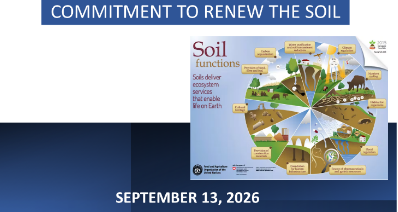
September 13, 2026
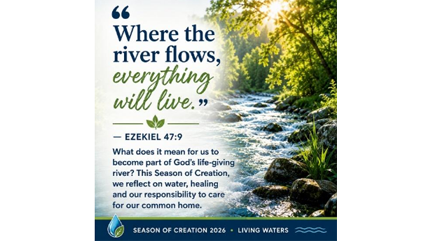
This is the second Sunday of the Season of Creation, and although the theme this year is, Living Water, we need to spend time talking about our relationship with the land. Even if we’re not farmers, we still live on the land, worship on the land, and derive a great deal of our sustenance from the land.
Neither of the scriptures seem to relate directly to soil management, but then how we relate to the land is as much a spiritual issue as it is an environmental issue.This is the second Sunday of the Season of Creation, and although the theme this year is, Living Water, we need to spend time talking about our relationship with the land. Even if we’re not farmers, we still live on the land, worship on the land, and derive a great deal of our sustenance from the land.
Neither of the scriptures seem to relate directly to soil management, but then how we relate to the land is as much a spiritual issue as it is an environmental issue.
September 6, 2026
Last week we heard Psalm 137 which is written from the time of the Babylonian exile. Well the Book of Ezekiel is also set during the Babylonian exile (Ezekiel 1:1), after the fall of Jerusalem at the beginning of the sixth century BCE. Ezekiel, a priest, is among those exiled and is commissioned by God as a prophet to the demoralized people of Israel.
His message initially centres on God's judgment against Israel's idolatry and injustice, interpreting the fall of Jerusalem and the destruction of the Temple as divine judgment carried out through the Babylonian armies (Ezek 7-10; 21). Yet Ezekiel’s message does not end in judgment: God has not abandoned his people.
August 30, 2026
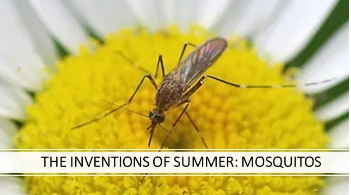
Mosquitos! Yes, they may be a reliable source of food for birds, bats, dragonflies and frogs in the chain of life, but they are also vectors for deadly disease, especially malaria.
So why am I considering mosquitoes as one our “inventions of summer?”
Because life is sometimes hard and we are living in troubling times and mosquitoes, with their annoying ways, can teach us something about praying through hard times.
Janice MacLean writes’ “We’re talking about the hard times that come to each of us as part of being human with soft bodies in a hard world. We get bad news. We struggle with disappointments or anxiety or fear. We grieve the loss of loved ones or dreams, or the best job ever, or a friend who moves away, physically or emotionally.
August 23, 2026
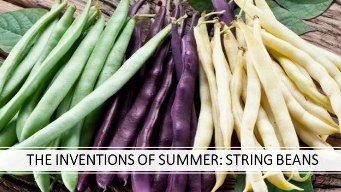
Today is the fifth Sunday in our summer series called Inventions of Summer. The series was put together by Janice MacLean and distributed by the United the Church of Canada. It supplied some wonderful beginning thoughts, ideas, themes, scripture lessons and many of the prayers shared in worship. Rev. Chris, Rev. Gaylyn and I are indebted to the church for this wonderful gift of creativity. The theme for today is string beans. When I think of string beans, what comes to mind is what some called pole beans but I in reality beans that grow on a low bush or those that climb a trellis are both string beans. String beans have a long history in Canada. Among the Haudenosaunee nations string beans were considered to be one of the three sisters. The three sisters were three crops that were planted together, squash, corn, and beans. The beans were encouraged to grow on the stocks of the corn and the string beans gave nitrogen to the soil. The squash with it’s prickly leaves gave protection and ground cover to shade the earth and lock in the moisture. One helping the other. In such a way that all the plants were helped to stretch toward the light.
August 9, 2026
I’ve never been much of a gardener, so I always get a little nervous speaking from a place of ignorance, when Jesus talks about growing plants. But it’s not just ignorance, there’s wonder there too, as a child I didn’t understand how God could fold something the size of a watermelon into such a small seed. Or mustard plants. Or fig trees. I know Jesus uses these images because they were ordinary, not requiring huge leaps in his listeners’ imagination, but what I wouldn’t give for Jesus to use what I know, maybe talk about Marvel movies? Poet Mary Oliver revelled in what she knew, these images more prevalent in these summer months, the creations or inventions of summer. Loving the seeds and growing things thriving when the sun is high in the sky, she captured the power of this season in her poem The Summer Day
September 20, 2026
There are times when the word peace can feel almost naive. We say, “Peace be with you.” We sing about peace. We pray for peace. And yet we live in a world where peace can seem impossibly far away.
We look toward the ongoing suffering and conflict in Israel and Palestine, and especially toward the anguish of Palestinian people who have endured displacement, occupation, violence, loss of homes, hunger, fear, and the death of loved ones. We hear the cries of people on all sides who long to live without fear. We encounter images and stories that can leave us angry, heartbroken, confused, and sometimes even helpless. And perhaps the most difficult thing is that there are no simple answers.
Peace does not mean pretending that injustice doesn’t exist. ……………..